

About Sphynx Cats
This is where our journey begins. Get to know our business and what we do, and how we're committed to quality and great service. Join us as we grow and succeed together. We're glad you're here to be a part of our story.
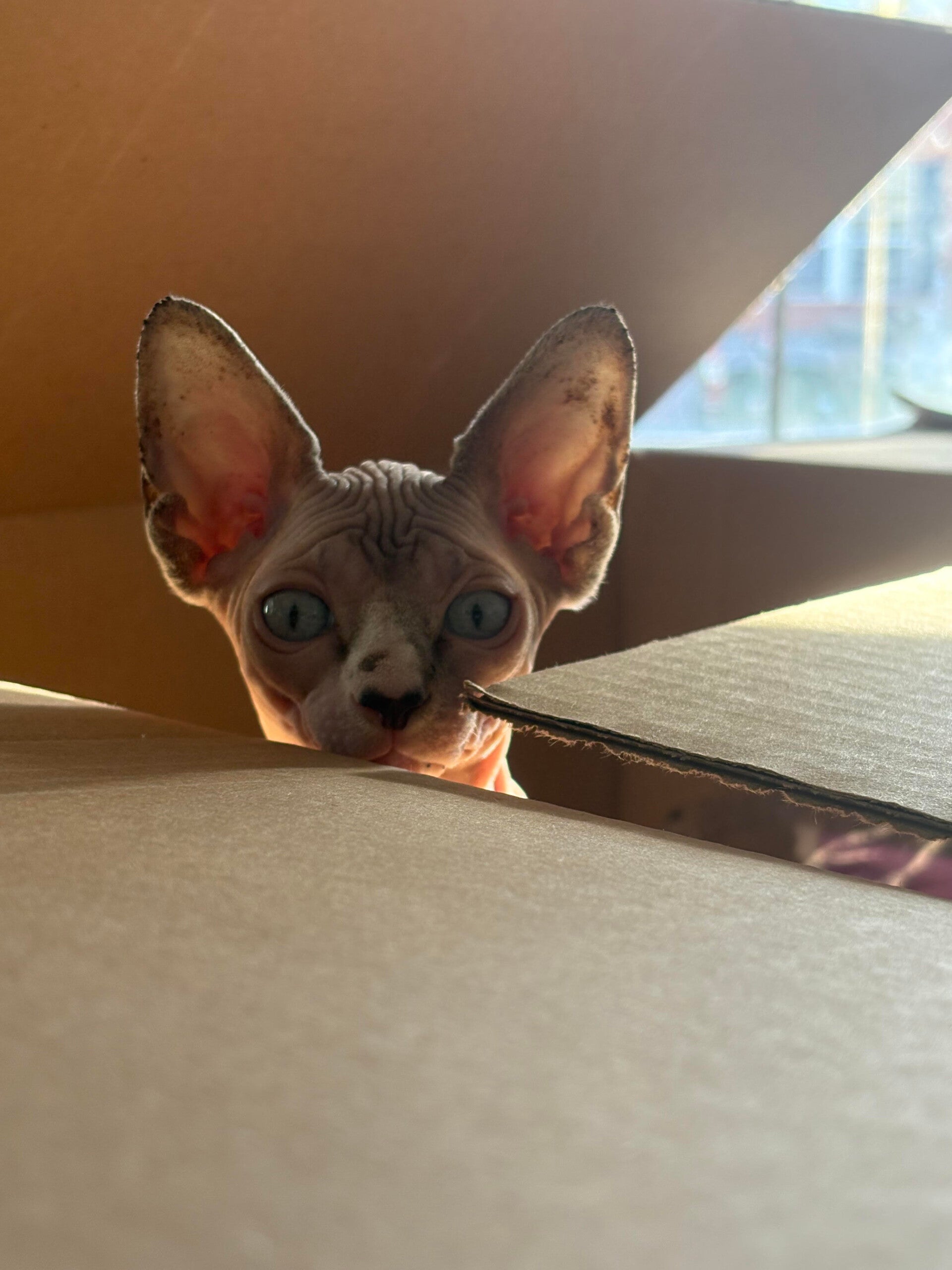
Why Sphynx?
- Distinctive appearance: The Sphynx is known for its nearly hairless body, large ears, soulful lemon-shaped eyes, and rounded belly, giving it an unusual, eye-catching look.
- Soft, warm skin: Although often called "hairless," the breed usually has a fine layer of fuzz. Its skin is commonly described as feeling like warm suede.
- Friendly personality: Sphynx cats are highly social, affectionate, and people-oriented. They often enjoy being around their owners and seek attention.
Overall, the passage emphasizes that the Sphynx's appeal comes from both its striking appearance and its affectionate temperament, making it a favorite among many cat enthusiasts.
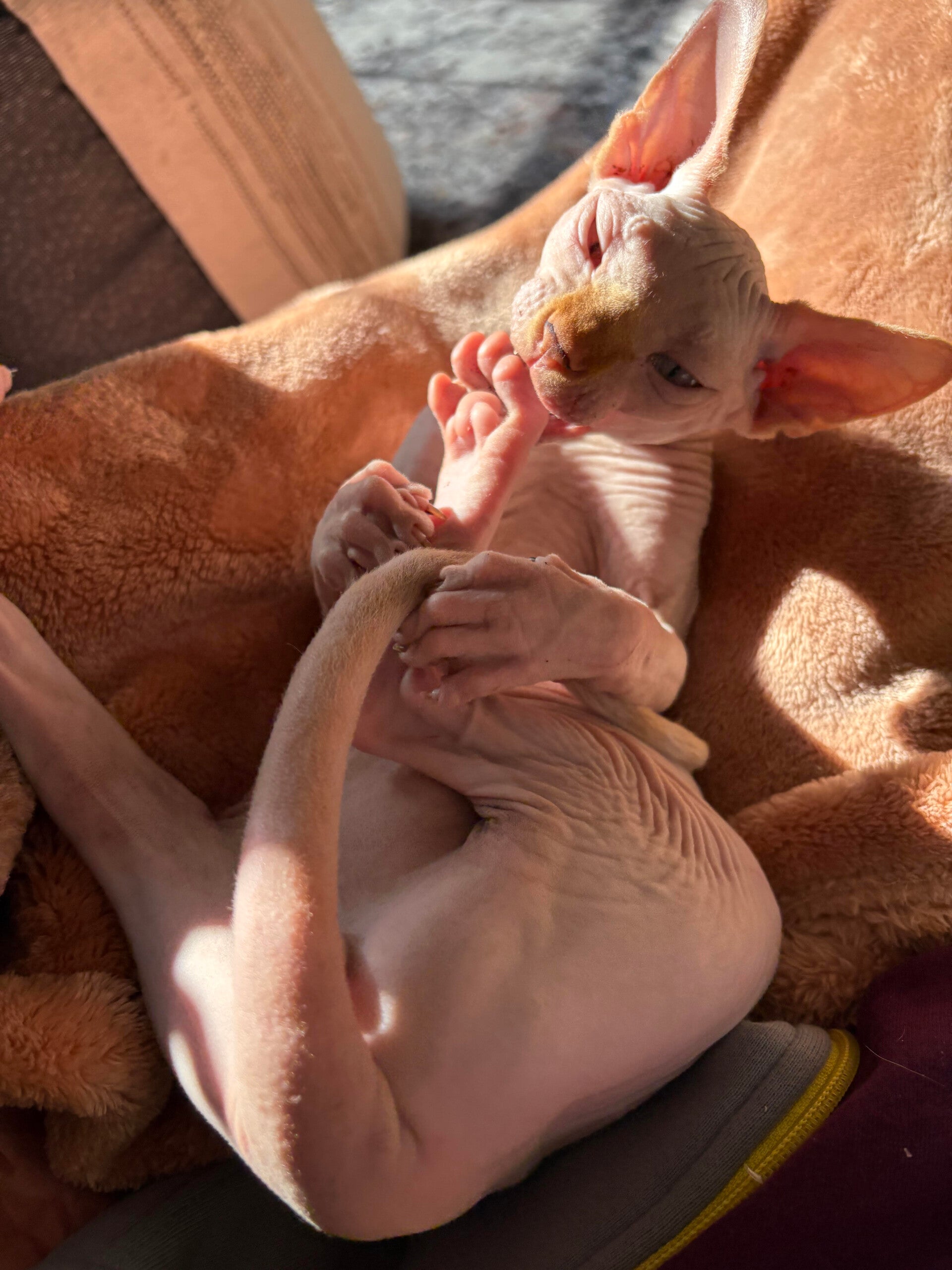
Breed History
- Origin (1966): The first modern Sphynx appeared when a domestic cat in Toronto gave birth to a naturally hairless kitten due to a recessive genetic mutation.
- Breed development: Breeders mated the hairless cats with normal-coated cats (called outcrossing) and then bred their descendants back to hairless cats. This process took about 30 years and helped create a healthy breed with a diverse gene pool and hybrid vigor (improved genetic health from diverse ancestry).
- Additional bloodlines: In 1975, two more naturally hairless kittens, Epidermis and Dermis, were born in Minnesota. They were bred with American Shorthair and Devon Rex cats to strengthen the developing Sphynx breed.
- Official recognition: The Cat Fanciers' Association (CFA) accepted the Sphynx for registration in 1998, and the breed achieved Championship status in 2002, allowing it to compete in CFA championship shows.
In short, the modern Sphynx is not the result of genetic engineering. It was developed from a naturally occurring genetic mutation, followed by decades of careful, responsible breeding to establish a healthy and recognizable breed.
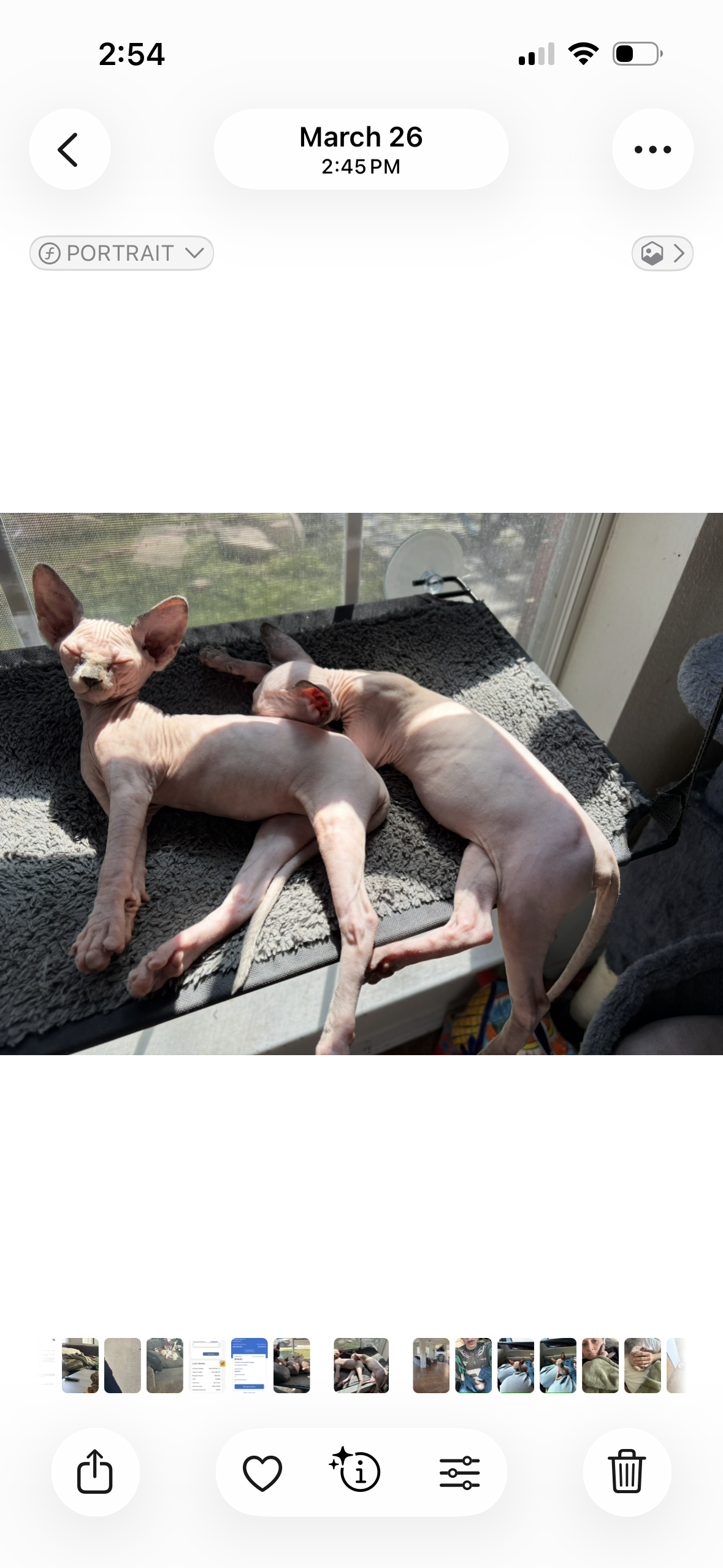
Grooming
- Not completely hairless: Despite their reputation, Sphynx cats usually have a fine layer of hair, especially on the nose, ears, and tail. The amount of hair can vary and may change with the seasons or hormones.
- Not hypoallergenic: Although some people with cat allergies may tolerate Sphynx cats better, they are not truly hypoallergenic.
- Skin care: Sphynx cats have oily skin that requires regular bathing.
- Allergens: Bathing helps reduce allergens on the skin, so a freshly bathed Sphynx may be less likely to trigger allergy symptoms. However, this does not mean the breed is low-allergen or allergy-free.
Key point: Sphynx cats are not completely hairless and not hypoallergenic, but regular bathing can help reduce the amount of allergens on their skin.